
A Brief Overview of Folk Song Traditions in the Faroe Islands
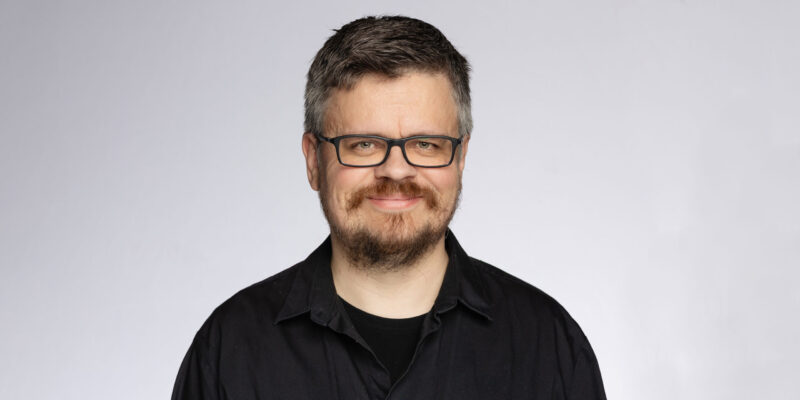
By Knút Háberg Eysturstein
The folk song traditions of the Faroe Islands are predominantly vocal in origin. Singing, chanting, and/or dancing formed the basis of older musical traditions, including:
- føroyskur dansur, the ballads of the Faroese chain dance
- kingosangur, a tradition of unaccompanied religious singing
- skjaldur, children’s and nursery rhymes
- dansispøl, playful dance games
Although seventeenth- and eighteenth-century accounts mention instruments and dancing accompanied by instrumental music, instrumental music became established in Faroese musical practice only in the late nineteenth and twentieth centuries. Community singing, which became widespread during the twentieth century, represents a more recent strand of Faroese vocal tradition.
Chain Dance and Ballad Tradition
The Faroese chain dance and its ballad tradition constitute one of the longest-lasting forms of intangible cultural heritage in Faroese society and remain a living tradition today. Participants form a chain or ring and dance while ballads are performed vocally without instrumental accompaniment. The repertoire includes:
- kvæði, comprising heroic and other narrative ballads
- vísur, folk ballads
- tættir, satirical ballads
The characteristic performance of kvæði is expressed by the Faroese verb at kvøða, meaning to chant or recite a ballad.
Formalization of the Chain Dance Tradition
Written references to Faroese ballads and the chain dance date from the seventeenth century, although the traditions are believed to be considerably older. Today the dance is practiced at dance halls, schools, weddings, public events, and national celebrations. After the Second World War, dance associations were established throughout the islands, contributing to a more formalized cultivation of the tradition while retaining its participatory character.
Kingosangur, Skjaldur and Ólavsøka
Alongside the chain dance, Kingosangur developed as an unaccompanied form of congregational church singing characterized by considerable melodic variation, although it survives today primarily as a remnant of an earlier singing tradition. Skjaldur, children’s and nursery rhymes combining words and singing, form another part of the older vocal repertoire.
More recent traditions include communal singing, established outside church and chain-dance settings during the twentieth century, with schools playing an important role in its dissemination. It is particularly prominent during Ólavsøka, an annual festival encompassing cultural, political, and traditional events, when thousands gather in Tórshavn for midnight singing, traditionally followed by the Faroese chain dance. Morning singing also remains a practice in Faroese public schools.
References for Further Reading
Andreassen, E. (1992). Folkelig offentlighed – En undersøgelse af kulturelle former på Færøerne i 100 år. Museum Tusculanums Forlag.
Árnadóttir, T. (2019). Chain dancing. Handbook of pre-Modern Nordic memory studies: Interdisciplinary approaches. J. Glauser, P. Hermann & Mitchell, Stephen A. (Ed.). (pp. 716-726). De Gruyter. https://doi.org/10.1515/9783110431360-079
Blak, K., et al. (1996). Alfagurt ljóðar mín tunga – Kvæði, vísur, tættir, kirkjusálmar, skjaldur (English ed.: Traditional music in the Faroe Islands). Føroya Skúlabókagrunnur.
Christensen, A. (2020). ‘Kvæði í Føroyskari Samtíð’: Exploring Ballads as Popular Culture and Heritage in contemporary Faroese culture [Doctoral thesis]. University of Leeds.
Clausen, M. (2014). Føroya ljóð – Sound of the Faroes. Stiðin.
Eysturstein, K. H. (2018). Tónar av manna munni – um tað siðbundna í samtíðini. Frændafundur 9 (pp. 199–210). Hugvísindastofnun.
Eysturstein, K. H. (2024, June 3). Felagssangur [Community singing]. Tjóðsavnið – National Museum of the Faroe Islands. https://www.tjodsavnid.fo/skrain-livandi-mentan/felagssangur
Eysturstein, K. H. (2025). Hví sangur og tónleikur í fólkaskúlanum hava týdning: serliga nú. Sosialurin, 99(16), 26-27. https://www.in.fo/news-detail/hvi-sangur-og-tonleikur-i-folkaskulanum-hava-tydning-serliga-nu
Waagstein, J. (1930). Songbók Føroya skúla (2. útg.). H. N. Jacobsens Bókahandil. (Original work published 1906).
Waagstein, J. (1951). Songbók Føroya skúla: Annar partur. Skúlabókagrunnur Føroya løgtings.
About the Author
Knút Háberg Eysturstein is a PhD candidate in Music at the Faculty of Education, University of Faroe Islands.
About The Singing Map
The author is part of the team behind the project The Singing Map, which is a platform for sharing and discovering songs from the Nordics and the Scandinavian folk song traditions. The website is still under development. https://singingmap.com/
Links for Further Listening
“Føroyskur dansur” https://www.youtube.com/watch?v=U2S2KGNSF4M&t=3s
Dansifelagið í Havn: ‘Regin Smiður’ https://www.youtube.com/watch?v=7PjYURqtbqQ
“Føroyska landsliðið dansar føroyskan dans” – The Men’s Football Team doing Chain dancing https://www.youtube.com/watch?v=MCo6n7UfA8I
Kingo singing, men/congregation from Tjørnuvík 1950 https://www.youtube.com/watch?v=GlE1fQ27_Wk
Artiklen publiceres på det sprog, som forfatteren har valgt at skrive på.
