
Folk Song Traditions in Finland
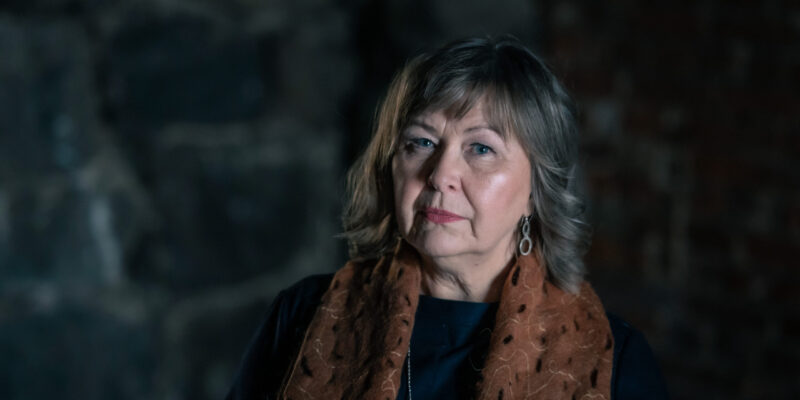
By Anna-Kaisa Liedes
The folk song traditions of Finland and its neighboring regions can broadly be divided into the older Finnic (Balto-Finnic) runo-song tradition and a more recent folk song repertoire, partly influenced by wider European traditions. As an officially bilingual country, Finland has also maintained a vibrant Swedish-speaking folk singing tradition to the present day. The diverse vocal traditions of the Sámi people, including various forms of joik, constitute a distinct musical culture of their own. The distinctive singing tradition of the Finnish Roma can still be heard in Finland. Other minority-language singing traditions include Karelian and Ingrian traditions.
Runo-song
The roots of the Finnic folk song tradition extend back some two thousand years. Among these peoples, including Finns, Estonians, Karelians, Ingrians, Votes, and Setos, runo-song became one of the most important forms of oral tradition. Runo-song is based on the Kalevala metre, also known as the runo-song metre, which is believed to have developed from Proto-Finnic. The collected runo-song repertoire consists largely of epic and lyric poetry, as well as spells. Runo-songs are characterized by variation and improvisation, and they often employ relatively minimalistic melodies. They were typically performed solo and without accompaniment. Alternating singing was also practised. A distinctive feature of the Ingrian tradition is the alternation between a lead singer and a choir, whose refrains are often sung polyphonically.
Laments
Alongside runo-song, a ritual lament tradition developed particularly among Orthodox Karelians and other Finnic communities. This tradition, practised primarily by women, was associated with major turning points in life, including weddings, departure for war or military service, and death. Although laments are most commonly connected with grief and separation, expressions of gratitude have also been documented.
Later Folk Song Genres
More recent folk song genres include religious songs, polska songs and other dance songs, ballads, broadside ballads, children’s songs, as well as play and work songs. The most popular folk song genre in Finland became the rekilaulu, a rhyming song consisting of four-line stanzas. With the spread of these newer song forms, the alliterative style of runo-song gradually gave way to stanzaic songs based on end rhyme.
About the author
Anna-Kaisa Liedes is a musician, singer, sound artist and teacher.
About The Singing Map
The author is part of the team behind the project The Singing Map, which is a platform for sharing and discovering songs from the Nordics and the Scandinavian folk song traditions. The website is still under development. https://singingmap.com/
Links for further reading or listening
https://yle.fi/aihe/artikkeli/2016/04/21/etta-pahat-paraneisi-loitsujen-jaljilla
https://www.karjalansivistysseura.fi/kulttuuri/runolaulu/
https://etno.net/musiikin-muisti/musiikin-muisti-2
https://www.karjalansivistysseura.fi/kulttuuri/itkuvirret/
https://balladilaulaja.blogspot.com/
https://trepo.tuni.fi/handle/10024/67687?show=full
https://kamukanta.fi/tapahtuma/musiikin-muisti-3-romanien-lauluperinne-vanha-modaalinen-laulu/
Artiklen publiceres på det sprog, som forfatteren har valgt at skrive på.
